

Specifications | Configuration options | Description
Specifications 1)
| Model |
H1 |
| Conversion efficiency 2) | |
| Fundamental to second harmonic |
> 50 % |
| Fundamental to third harmonic |
> 30 % |
| Fundamental to fourth harmonic |
> 15 % |
| Fundamental to fifth harmonic |
> 6 % |
| Pulse to pulse energy stability @ 3) | |
| 526.5/532 nm |
<2.5 % RMS |
| 351/355 nm |
<3.5 % RMS |
| 263/266 nm |
<4 % RMS |
| 211/213 nm |
<5 % RMS |
| Spectral purity for Port #1 4) |
>99% |
| Typical pulse duration |
10-20% shorter in each conversion stage |
| Typical beam diameter |
10-30 % smaller than pump beam |
| Beam pointing stability |
same as of pump beam |
| Dimensions | |
| Harmonic generator (W×L×H) |
110 × 242× 112 mm3 |
| Operating requirements | |
| Ambient temperature |
15 – 30 ºC |
| Relative humidity |
10 – 80 % (non-condensing) |
| Powering |
12 VDC 5) |
| Average power consumption |
<10 W |
Configuration options
|
Model |
Port #1 |
Port #2 |
||
|
Wavelength 7) |
Attenuator (optional) 8) |
Energy monitor (optional) 9) |
Wavelength |
|
|
H1- |
||||
|
SH |
532 nm |
-AT2 |
-EM2 |
1064 nm 10) |
|
TH |
355 nm |
-AT3 |
-EM3 |
532+1064 nm 11) |
|
TH/SH |
355 nm |
-AT3 |
-EM3 |
532 nm 10) |
|
FH |
266 nm |
-AT4 |
-EM4 |
532+1064 nm 11) |
|
FH/PB |
266 nm12) |
-AT4 |
-EM4 |
N/A |
|
FH/SH |
266 nm 12) |
-AT4 |
-EM4 |
532 nm |
|
FiH |
213 nm 12) |
-AT5 |
-EM5 |
N/A |
|
FiH/SH |
213 nm 12) |
-AT5 |
-EM5 |
532 nm |
- Due to continuous improvements all specifications are subject to change. The parameters marked typical are not specifications. They are indications of typical performance and will vary with each unit we manufacture.
- Conversion efficiency presented here is for Port #1. Conversion efficiency at Port #2 depends on unit configuration and typically are lower than presented here. Please inquire for details.
- When unit is pumped by our Q1 series laser. Measured during 30 seconds operation after warm-up.
- Spectral purity at Port #2 could not be specified for two-wavelength output configuration.
- When supplied with Q1 laser, H1 is powered from laser controller.
- See Figure 1 below for port number assignment. Inquire for custom configurations.
- Wavelength is shown for 1064 nm pump wavelength. For 1053 nm pump wavelength recalculate wavelengths accordingly.
- Shows compatible attenuator model. This option is available only when H1 is supplied together with Q1 series laser.
- Shows compatible pulse energy monitor model. This option is available only when H1 is supplied together with Q1 series laser.
- Spectral purity is >98 %.
- Both wavelengths exit Port #2, for separation external dichroic mirror is required.
- Spectral purity for this model is >99.9%.
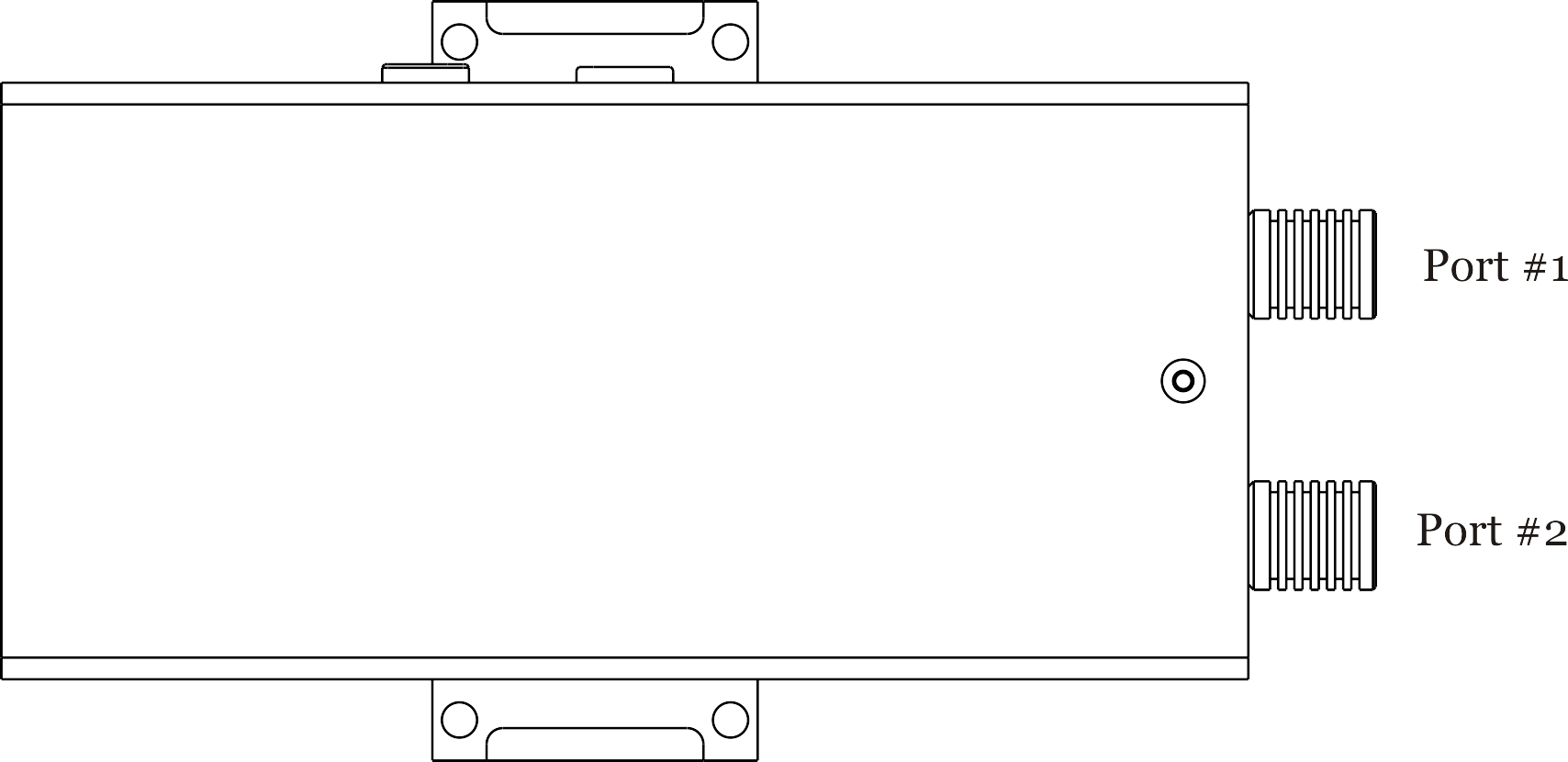
Figure 1. H1 harmonic generator port number assignment
Description
The H1 Harmonic Generator is a stand-alone module designed for efficient wavelength conversion of Q1 series diode-pumped, air-cooled lasers.
It can be mounted side-by-side with the Q1 laser on a common optical table or breadboard, providing a compact and stable setup for harmonic generation applications.
The H1 module supports generation of up to the fifth harmonic, enabling access to a broad wavelength range — from the fundamental 1064 nm down to 213 nm. Depending on configuration, the H1 can be factory-optimized as a Second Harmonic Generator (532 nm), Third Harmonic Generator (355 nm), Fourth Harmonic Generator (266 nm), or Fifth Harmonic Generator (213 nm).
Harmonic generation is a phase-sensitive nonlinear optical process that relies on precise phase matching within birefringent crystals. In the H1 system, phase matching is optimized by temperature control rather than angular tuning. The built-in microprocessor continuously fine-tunes and stabilizes crystal temperature, ensuring consistent conversion efficiency and long-term reliability.
When integrated with a Q1 laser, the H1 module can be remotely monitored and controlled via the Q1 control panel (PC connection required). Alternatively, direct control is available through the built-in Ethernet interface.
Because most high-performance nonlinear crystals are hygroscopic, maintaining proper thermal conditions is essential for extended lifetime. The H1 keeps the crystals at elevated temperatures, significantly extending their operational life — often beyond that of the laser itself. For best performance, the module should remain powered continuously or stored in a dry environment when not in use.
Optional extensions
The functionality of the H1 Harmonic Generator can be enhanced with optional accessories:
-
Motorized attenuators – allow precise adjustment of pulse energy at the selected harmonic wavelength (up to the 5th harmonic).
-
Pulse energy monitors – attachable sensors for real-time measurement of output energy directly from the harmonic generator or attenuator.
-
Fiber-coupled outputs – available upon request for flexible beam delivery.